Q#5 What are some similarities and differences among the southern colonies of Virginia Maryland North Carolina
South Carolina and Georgia?
Amongst the southern colonies the biggest
similarity that connected them was plantation. These southern colonies survived
as well as made their living from tobacco, rice and indigo. The plantation
allowed them a religious freedom, as many of these southerners where more
interested in making money rather then attending a holly mass. However the
plantation in these colonies where owned by the Caucasian, therefore slaves
where a common factor in their harvesting success. Slaves became common
throughout these colonies, making them the prime source of their existence,
these colonies abused of the slaves and found no wrong in slave labor. The
colonies where made up of people searching for a different lifestyle from the
one in England, and therefore making them exploiters. And all where named after
Kings and Queens, also the years they where founded differ quite a bit.
Differences did exist, Maryland was in fact a religious colony unlike the rest,
Georgia was not such a well developed colony yet and was filled with more
wilderness then civilization at the time. Virginia was more focused on expansion
westward, and North and South Carolina wanted to remain closer to the coast.
Nevertheless they became more distinct from other England colonies because
of how they achieved success, enslavement would go on to become a prime subject
of protest in order to abolish the harsh injustice.
ColonizationUSHistory
Friday, August 10, 2012
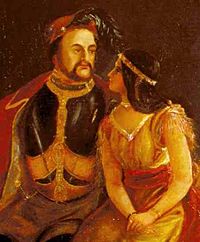
| John Rolfe and Pocahontas |
Two years after the peace treaty with Spain, England was out at sea searching for Jamestown, Virginia.In the year 1606 King James I granted the expedition of Jamestown, gold being the prime motivator. Once they landed in the Chesapeake region, the men where attacked by Indians and pushed into the James river.The area was easy to defend but was mosquito infested and and increasingly unhealthy, which proved a challenge to the so called "gentlemen". The men in this colonist expedition where described as "gentlemen" by John Smith a man who would later be enlisted to their aid. Partly because they where all from England and high class these men did not know how to fend for themselves, they became so hungry for a non- existent gold that they never bothered to search for actual useful resources in order to survive. Various men died from diseases and to make things worse the Powhatan people in the area began a war with the English men. Ultimately the war ended with the marriage of John Rolfe and Pocahontas, daughter of the Powhatan chief. John Rolfe would eventually be the one to bring some prosperity and stability to the unstable Jamestown. John began a tobacco plantation after he discovered a way to get rid of the bitter tang. With this knew flavor, tobacco became a highly requested import and soon Jamestown was being lifted into a stable economy.
| Defeat of the Spanish Armada |
Various factors where involved in the desire for colonization from England, as history shows England did not initially act on the colonizing trend, but instead allowed time and necessity set the path for a stressful but eventual success. Caught in a constant battle with Spain, England finally put an end to Spain's imperial dreams, decreasing Spain's dominance in the New World allowing England a better chance at colonizing. With the fresh defeat of the Spanish Armada, in came a Golden Era of literature where poets such as William Shakespeare made references to the wonders of the American colonies, new desires bloomed as the people of England desired to seek these places that offered an adventure and opportunities for a new life. In the opening of the seventeenth century social and economical changes occurred. England's population increased from 3 million to 4 million starting from the year 1550 all the way to the 1600. As the population grew job opportunities began to disappear, landlords began to close down farm lands and the workers found it difficult to find any remaining jobs. Soon workers Found themselves begging for money in cities such as Bristol and London. The enormity of the pauper population alarmed the citizens, concluding that England had reached their maximum point in capacity. These factors led England to seek colonization, the obvious unemployment, population growth, marketing, adventure and the horizon cleared from Spain at last.Two years later England sought to colonize Jamestown, Virginia a mission that proved challenging.
Subscribe to:
Comments (Atom)